What Are Hypoglossal Nerve Implants?
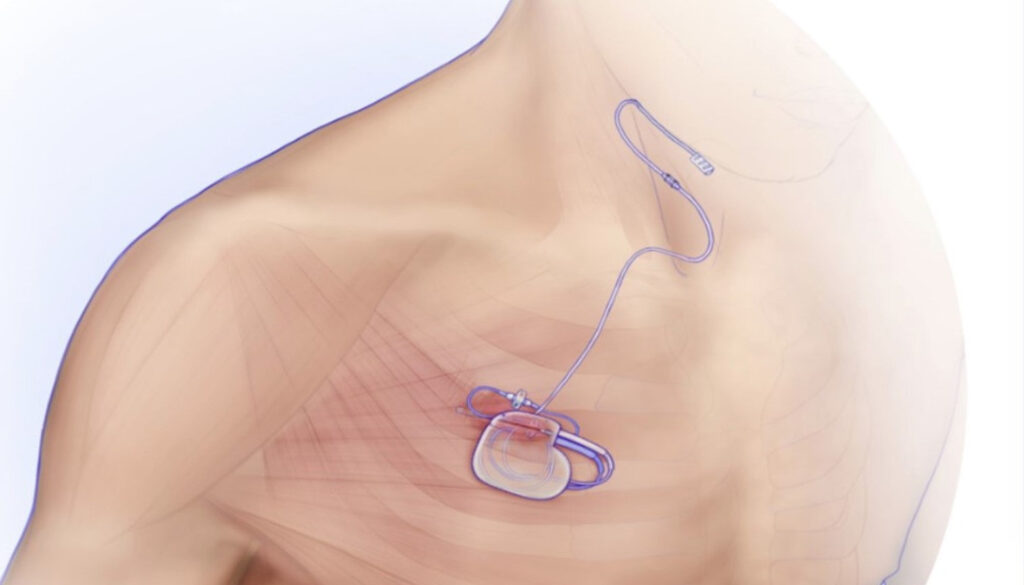
Hypoglossal nerve implants are medical devices used to treat obstructive sleep apnoea by preventing airway collapse during sleep. They work by stimulating the nerve that controls tongue movement, keeping the airway open when breathing would otherwise stop.
These implants are used in selected patients who cannot tolerate CPAP and meet strict clinical criteria.
If obstructive sleep apnoea persists despite CPAP or other treatments, call 020 3813 0733 or 020 3423 7665 to arrange a specialist assessment and discuss whether hypoglossal nerve implants may be suitable.
What Is a Hypoglossal Nerve Implant?
A hypoglossal nerve implant is an implanted device that stimulates the tongue to maintain airway patency during sleep.
It activates the hypoglossal nerve in time with breathing to stop the tongue falling backwards.
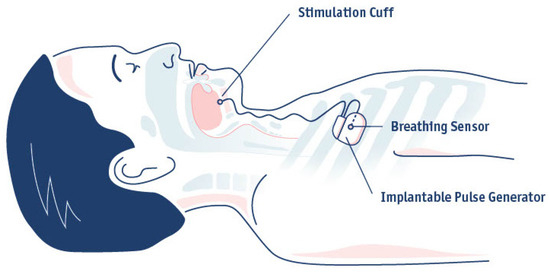
The system includes a small generator implanted in the chest, a breathing sensor, and a stimulation lead connected to the hypoglossal nerve. The device is switched on at night and works automatically while the person sleeps.
Hypoglossal Nerve Implant at a Glance
| Aspect | Details |
|---|---|
| Purpose | Treat obstructive sleep apnoea |
| How it works | Stimulates tongue muscles during sleep |
| Alternative to | CPAP therapy |
| Suitability | Selected moderate–severe OSA cases |
| Invasiveness | Surgical implantation required |
How Do Hypoglossal Nerve Implants Work?
Hypoglossal nerve implants work by synchronising tongue movement with breathing.
This prevents the tongue from collapsing into the airway during sleep.
When the device senses an inhalation, it delivers a mild electrical impulse to the hypoglossal nerve. This causes the tongue to move forward slightly, keeping the airway open and allowing uninterrupted breathing. The stimulation is controlled and does not interfere with normal speech or swallowing when awake.
Who Are Hypoglossal Nerve Implants Suitable For?
Hypoglossal nerve implants are suitable only for selected patients with obstructive sleep apnoea. They are not appropriate for everyone with snoring or sleep apnoea.
Candidates typically have moderate to severe obstructive sleep apnoea, are unable to tolerate CPAP, and do not have complete airway collapse. Body mass index, airway anatomy, and sleep study results all influence suitability. Careful assessment is essential before considering this treatment.
Are Hypoglossal Nerve Implants Effective?
Hypoglossal nerve implants are effective in reducing sleep apnoea severity in appropriately selected patients.
Clinical studies show significant reductions in breathing interruptions and improvements in sleep quality.
Effectiveness depends on correct patient selection and device optimisation. While many patients experience meaningful symptom improvement, implants do not cure sleep apnoea and ongoing follow-up is required to monitor results.
What Are the Risks of Hypoglossal Nerve Implants?
Hypoglossal nerve implants involve surgery and carry associated risks. These include infection, discomfort, nerve irritation, and the need for future device adjustments or replacement.
Not all patients achieve the same level of improvement, and the procedure is not reversible without further surgery. For these reasons, hypoglossal nerve implants are considered only after non-surgical treatments have been assessed or tried.
When Should Hypoglossal Nerve Implants Be Considered?
Hypoglossal nerve implants should be considered only after CPAP and other treatments are unsuitable or unsuccessful. They are part of a specialist sleep apnoea treatment pathway rather than a first-line option.
Assessment usually includes sleep studies, airway examination, and multidisciplinary review. This ensures the treatment is offered only when the likelihood of benefit outweighs the risks.