What Causes Snoring?
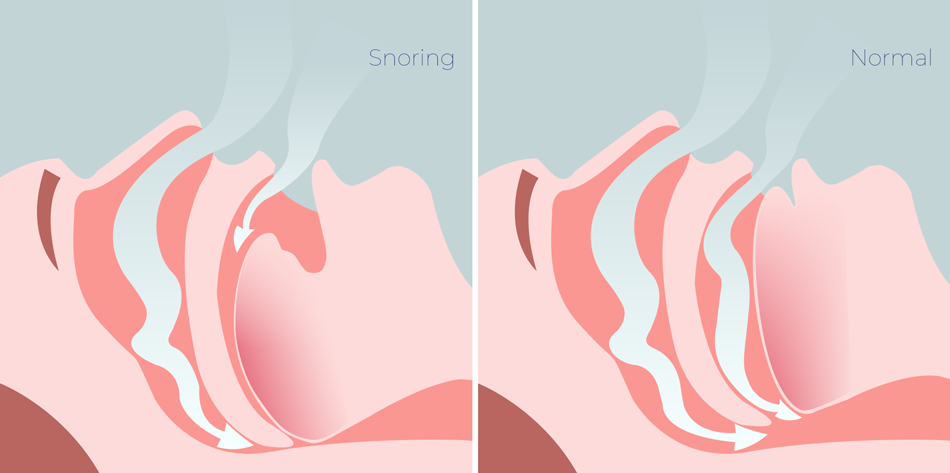
Snoring is caused by restricted airflow during sleep, which makes the soft tissues in the throat vibrate. While many people snore occasionally, regular snoring usually has an identifiable cause rather than happening at random.
For some, snoring is little more than a nuisance. For others, it can affect sleep quality, relationships, and overall health. Understanding what causes snoring helps clarify whether simple changes are enough or whether professional assessment may be needed.
For specialist snoring treatment in London, speak with our clinical team on 020 3813 0733 or 020 3423 7665 to explore assessment and treatment options.
What Causes Snoring When You Sleep?
Snoring happens when air cannot move freely through the nose or throat during sleep. As the muscles of the airway relax, the space available for airflow narrows and surrounding tissues begin to vibrate as air passes through.
This process is more noticeable during deeper stages of sleep, when muscle tone reduces further. The more restricted the airway becomes, the louder and more persistent snoring tends to be. In practice, this is why snoring often worsens later in the night or after alcohol consumption.
What Are the Most Common Causes of Snoring?
The most common causes of snoring are relaxed throat muscles, nasal blockage, and airway shape. These factors all reduce airflow and increase vibration during breathing.
Alcohol before bed is a frequent contributor, as it relaxes the throat muscles more than natural sleep alone. Nasal congestion caused by colds, allergies, or a deviated septum can also play a role by forcing mouth breathing. Structural factors, such as enlarged tonsils or a long soft palate, may further narrow the airway. According to the NHS, snoring often occurs when the tongue, mouth, or throat relax during sleep and partially block airflow.
Can Sleeping Position Make You Snore?
Yes, sleeping on your back increases the likelihood of snoring for many people. When you lie on your back, gravity causes the tongue and soft tissues to fall backwards into the airway.
This reduces the space available for air to pass through and makes vibration more likely. Side sleeping can reduce snoring in mild cases and is often one of the first changes people try. However, if snoring continues regardless of position, it may suggest a more fixed cause such as airway anatomy or an underlying sleep disorder.

Does Weight or Lifestyle Affect Snoring?
Yes, weight and lifestyle choices have a direct impact on snoring. Extra tissue around the neck and throat can place pressure on the airway during sleep, increasing resistance to airflow.
Alcohol and smoking both contribute by relaxing or irritating the airway tissues. Late-night meals can also worsen snoring by increasing reflux or airway pressure when lying down. The Sleep Foundation identifies obesity, alcohol use, and smoking as well-established risk factors for snoring and sleep-disordered breathing.
When Is Snoring a Sign of a Medical Problem?
Snoring may be a medical concern if it is loud, persistent, or linked to breathing interruptions. In some cases, snoring is a symptom of obstructive sleep apnoea rather than a problem on its own.
Warning signs include pauses in breathing, gasping during sleep, not feeling refreshed after sleep, and excessive daytime tiredness. If snoring is affecting health, concentration, or relationships, assessment can help identify whether treatment is needed. Many people seek specialist snoring treatment after symptoms persist despite lifestyle changes.
What Are the Best Treatments for Snoring?
The best treatment for snoring depends on what is causing the airway to narrow during sleep. There is no single solution that works for everyone, which is why proper assessment is important.
For mild snoring, simple changes such as reducing alcohol intake, improving sleep position, or treating nasal congestion may be effective. Where snoring is linked to jaw position or airway collapse, custom oral appliances can help by keeping the airway open during sleep. In some cases, targeted medical or specialist treatments may be recommended once the cause has been identified.
What Is the Difference Between Snoring and Sleep Apnoea?
Snoring is noisy breathing during sleep, while sleep apnoea involves repeated pauses in breathing. Although they are related, they are not the same condition.
Snoring occurs when airflow is partially restricted and tissues vibrate. In obstructive sleep apnoea, the airway repeatedly collapses, causing breathing to stop and start throughout the night. This leads to drops in oxygen levels and disrupted sleep, often without the person realising it. Not everyone who snores has sleep apnoea, but persistent loud snoring combined with daytime tiredness should always be assessed.
For more information, speak to our sleep apnoea consultant in London by calling Ryan Cheong ENT on 020 3813 0733 or 020 3423 7665 to explore assessment and treatment options.